SubD Fundamentals
Lesson 1 of 16
Introduction to SubD
Sign in to access this lesson
This lesson is part of SubD Essentials: Organic Jewelry Design, which can come bundled with a RhinoArtisan Commercial license subject to current promotions. Log in with your customer account, or get in touch and we'll set you up.
Customers only
Solo para clientes
This lesson is part of SubD Essentials: Organic Jewelry Design, which can be included with a RhinoArtisan Commercial license subject to current promotions. If you've already purchased and don't see it in your account, get in touch.
What is SubD (Subdivision Surface)
Definition:
SubD stands for Subdivision Surface. In simple terms, we start with a shape made of flat faces, and Rhino automatically smooths it to create an organic surface.
Visual demonstration:
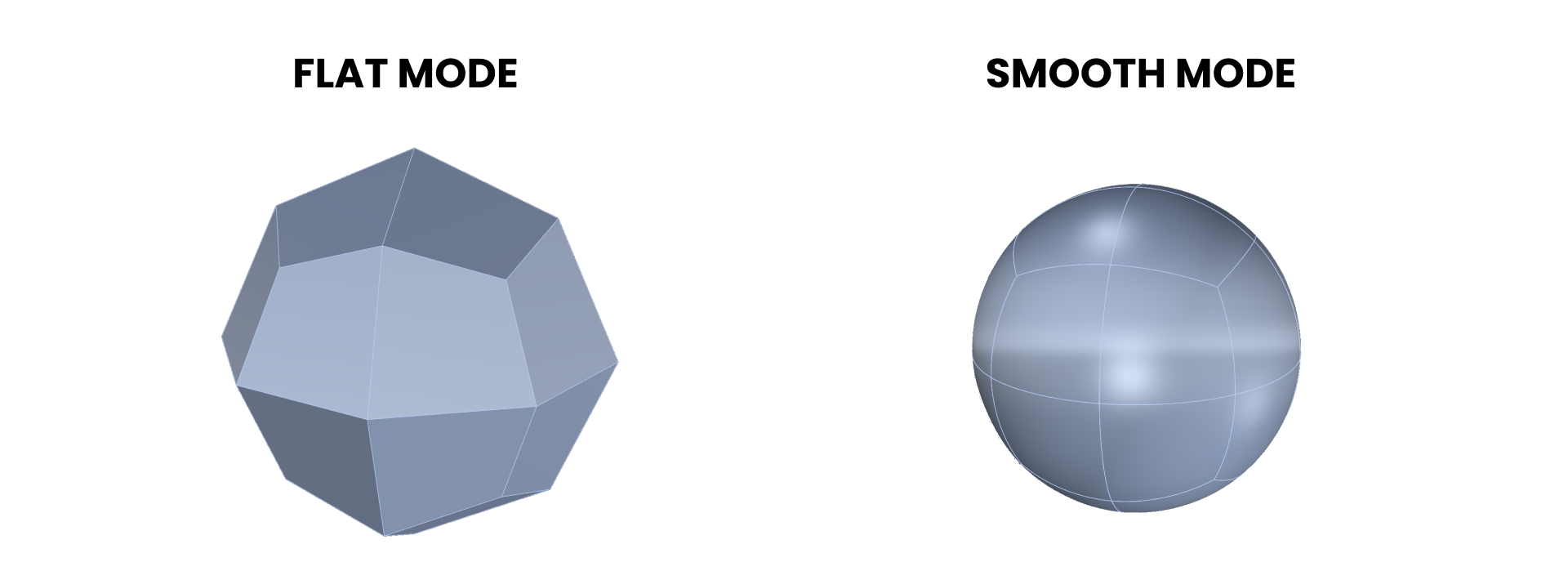
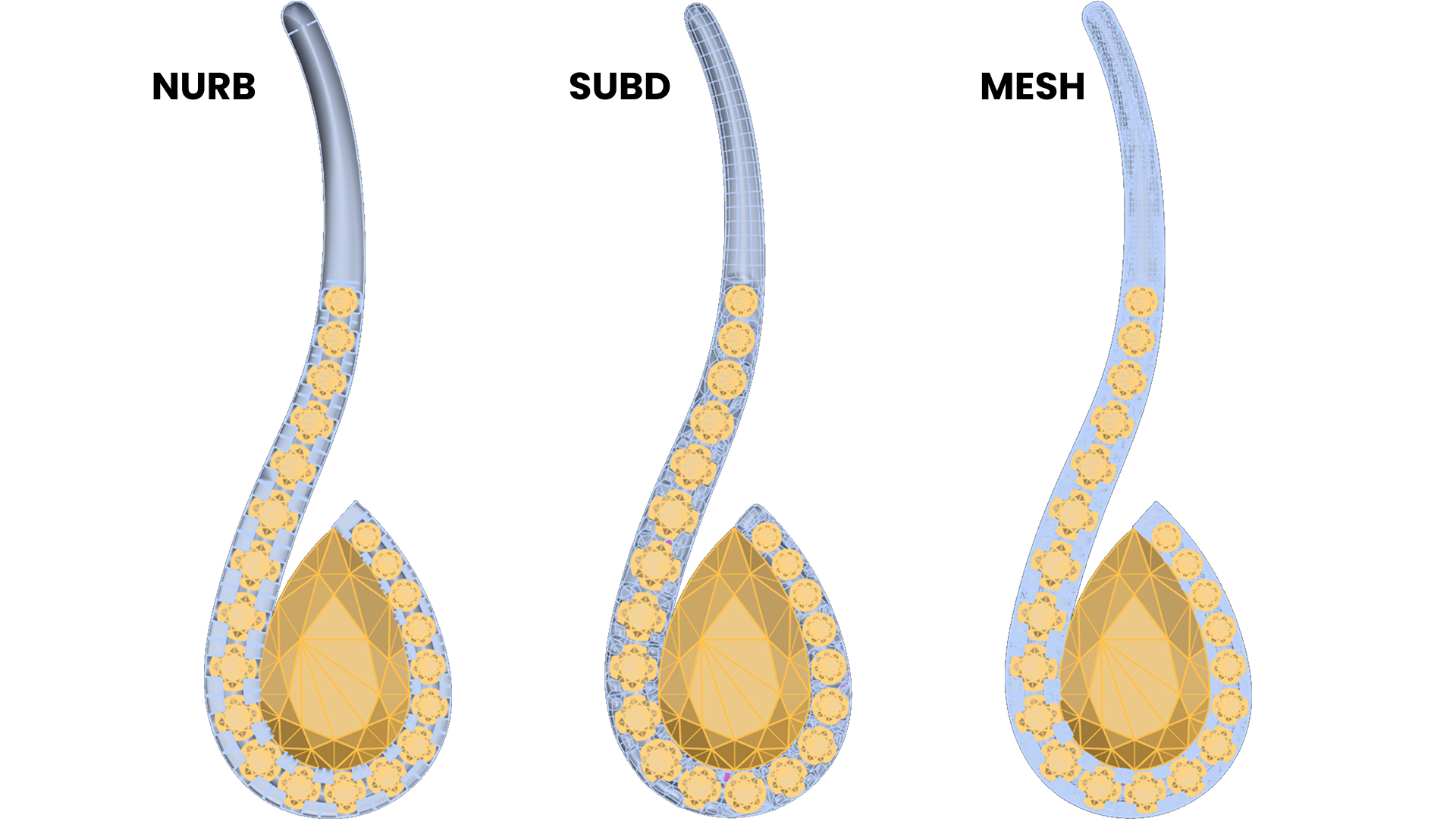
Key Differences Between NURBS, Mesh, and SubD
NURBS
NURBS surfaces are what we normally use in Rhino for technical jewelry modeling: a precise ring, a perfect stone setting, or a surface ready for fabrication.
Advantages:
-
100% precise.
-
Can be dimensioned and manufactured directly.
Limitations:
- Difficult to manipulate for very organic or sculptural forms.
Mesh
Meshes are made of flat polygons. They are lightweight, fast, and perfect for 3D printing or rendering, but direct editing is very limited.
Advantages:
-
Lightweight files.
-
Useful for 3D printing.
Limitations:
-
Very limited control in editing.
-
Hard to make design changes once the mesh is created.
SubD
SubD combines the best of both worlds: the freedom of meshes for organic shapes and the precision of NURBS because we can convert a SubD into NURBS whenever we want.
Advantages:
-
Highly flexible, ideal for fluid forms.
-
Editable by vertices, edges, and faces.
-
Can be converted to NURBS for fabrication.
Limitations:
-
Not as precise as NURBS from the start.
-
Requires careful topology (how vertices and edges are placed).
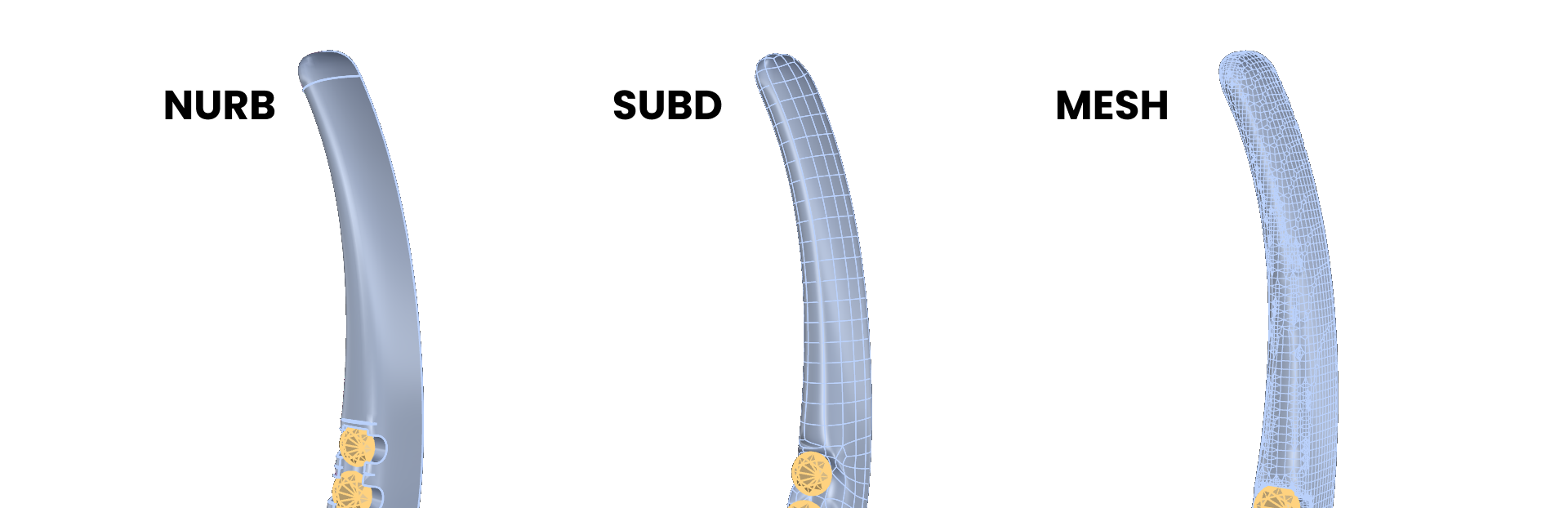
Conclusion
In jewelry, NURBS remains essential for technical and precise work, but SubD is perfect for adding creative freedom and more artistic shapes. Today, we will learn to navigate between these surfaces and use SubD as a complementary tool.
Almost there — you still have some lessons to complete. Jump to the next one →
Impersonating — progress and reviews are disabled.
Course completed
You've completed SubD Essentials: Organic Jewelry Design 🎉
Great work. Get your certificate of completion and, if you have a minute, let other jewelers know what you thought of the course.